
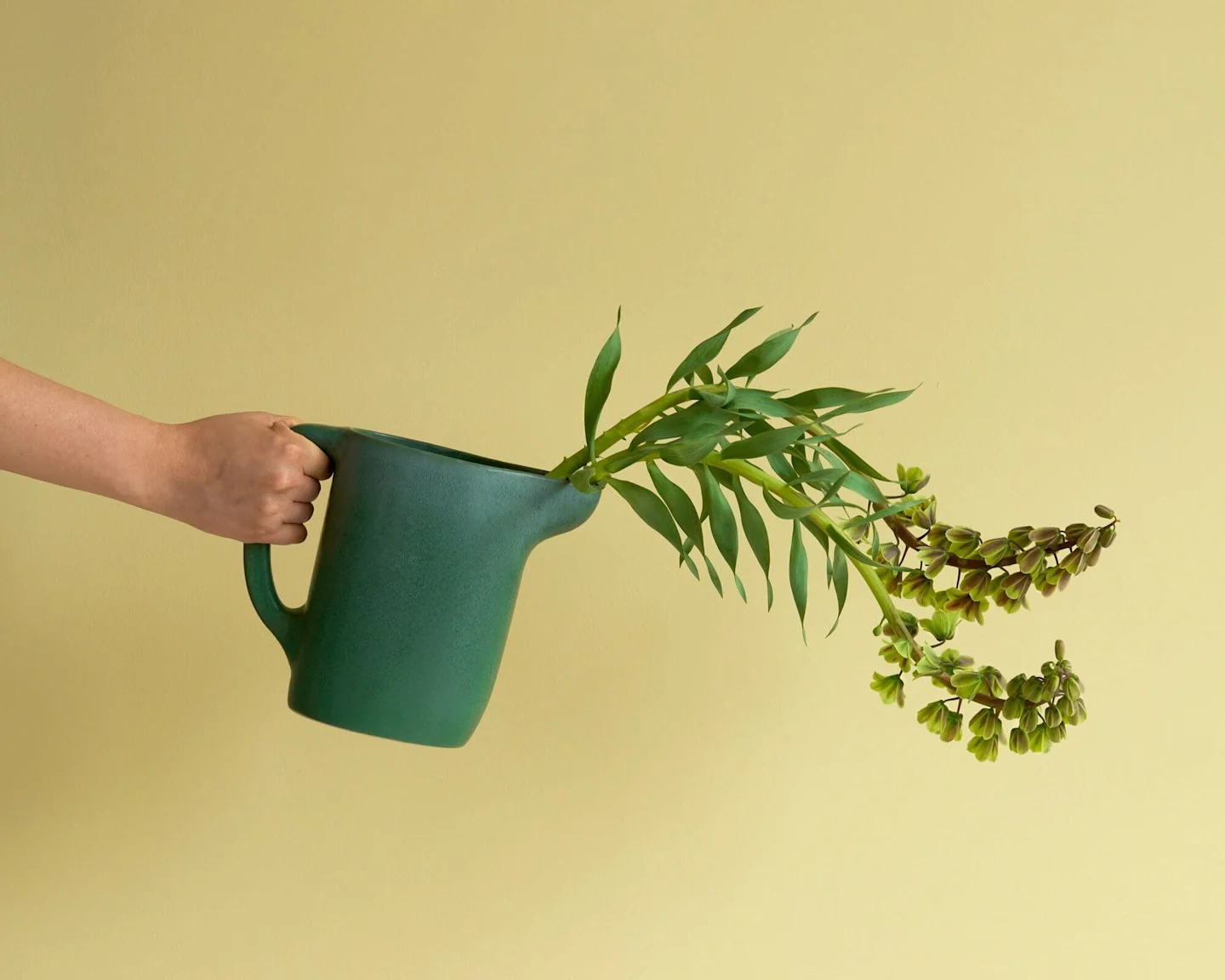
Take some time to learn more about the beauties in your vase. We’ve highlighted four different inspiring spring flowers.
Fritillaria ‘persica’
Nickname:
Family:
Take a close look at these majestic flowers. Her long stem with greyish-green leaves and bell-shaped flowers is quite unforgettable. There are over 150 species of Fritillarias and this kind, the ‘persica’, is extra special. Her bell-shaped flowers are aubergine-coloured, which is very uncommon for flowers. This beauty originally grows in (Middle-)Eastern countries like Iran, Turkey and Syria. She symbolises wealth, but we find her mostly quite quirky: it’s because she continues to grow in your vase. They may cause her flower head to become heavy and droop. Don’t worry, just cut a bit off the stem and refresh the water while you’re at it - the stem is naturally very thirsty.
Corylus
Nickname:
Family:
Hazel Corylaceae (hazel family) The Corylus often ornate the brunch table during Easter. The crooked shape is perfect to hang your Easter deco on. In the wild, the branch might look slightly different; instead of Easter eggs, you’ll find light-yellow catkins on its branches that look similar to cattails. Hence, the name. These catkins are the stamens of the branches that fall off when in bloom and this is how the tree can procreate. Would you like to have your own Corylus in your garden? Then save the branch in a separate vase and refresh the water regularly. If you wait long enough, you’ll see it’ll grow roots.
Craspedia
Nickname:
Family:
This funny-looking yellow drumstick is the Craspedia. Originally, this flower grows in the sunny parts of Australia and New-Zealand, where she’s called Billy Button. Finding this little sunshine in your vase, then you’re in luck. She’s one to enjoy for a long time because she’s also perfect to dry - she’ll even keep her pretty yellow colour.
Matricria
Nickname:
Family:
Camomile Asteraceae (composite family) Matricaria, better known as camomile, has been used for centuries as herbal medicine and still serves this purpose. In a steam bath to combat a cold for example. Or in your tea to relax with. The name is derived from a Greek word that means ‘ground apple’ and refers to the apple scent. In old herbal books, camomile was known as ‘plant doctor’. In the early days, people believed that the wilted plants would live again when placed near a camomile plant. So that is quite a promising perspective for your bouquet…