
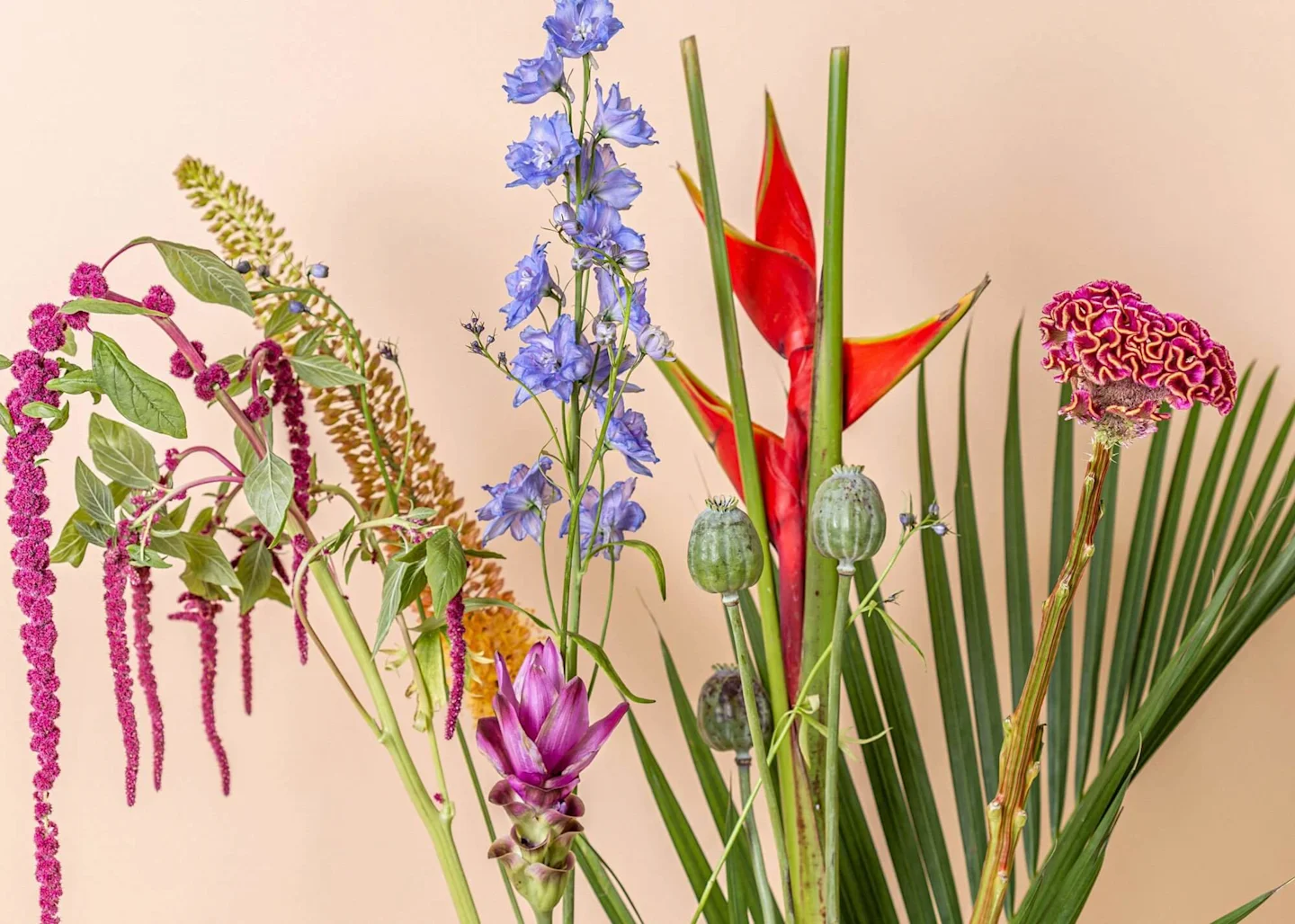
Summer’s in bloom! Our seasonal bouquets are bursting with bombastic colour, outlandish shapes, and tropical statements. Here’s what to look forward to in your vase this plus summer flower care tips to make them last in warm weather.
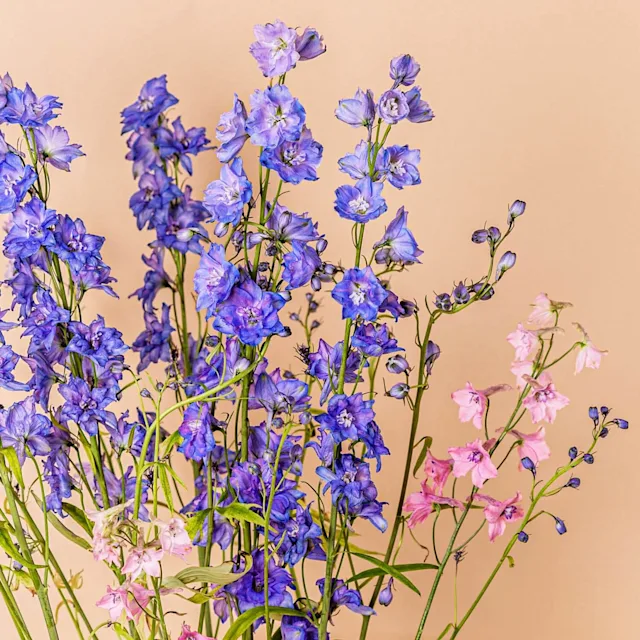
Delphinium
Nickname: Larkspur, Knight's spur
Family: Ranunculaceae (buttercup)
Delphiniums get their name from , Greek for ‘dolphin’, because the nectary looks like a dolphin's fin. In floriography , delphiniums represent a carefree spirit. There are over 400 different varieties — some are ‘true blue’, which is pretty rare!
Flower care:
Remember, always wash your hands after cutting delphinium stems. Cut the stems and refresh your vase water every three days (more often if it’s hot. Warm weather turns the water murky faster — and dirty water doesn't help flowers stay fresh!).
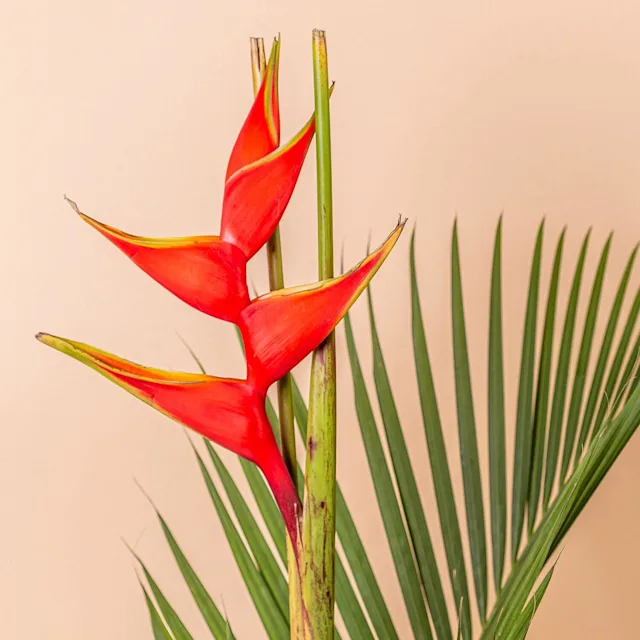
Heliconia
Nickname: Lobster-claws, Toucan peak
Family: Heliconiaceae (vines)
Heliconia is a cousin to bananas, gingers, and Strelitzia (bird of paradise). ‘Heliconia’ refers to Mt Helicon in Greece, the fabled home of the Muses. Heliconias are very long lasting your vase, reflecting the Muses, who are said to be eternally youthful. Heliconia ‘flowers’ are actually modified leaves and bracts that protect the true flowers and nectar inside!
Flower care:
Like all your flowers, cut the stem and put in clean water as soon as possible after delivery.
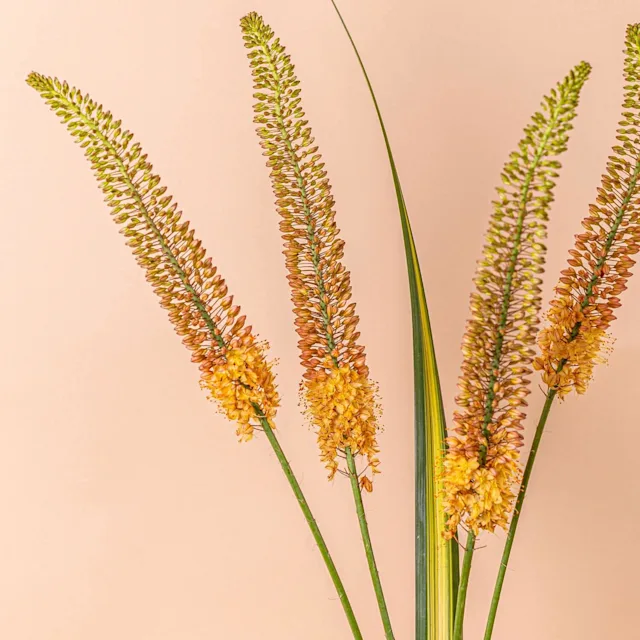
Eremurus
Nickname: Desert Candle, Foxtail lily
Family: Asphodelaceae
Eremurus comes from the Greek , meaning ‘desert’ and , meaning ‘tail’. Its two common names are a mix of both root words: desert candle and foxtail lily! One species, , can grow over 3 metres high, making it one of the tallest flowers on the planet!
Flower care:
Give your flowers some oomph to bloom, by adding a sachet of flower food. Only add flower food once, when your bouquet first arrives. The combo of too much flower food and summer weather wilts flowers faster!
Celosia
Nickname: Cockscomb
Family: Amaranthaceae
Celosia reminds us of coral at the bottom of the ocean, but the name comes from the Greek , meaning ‘burning’. Look out for Celosia ‘Turbo XXL’ in our bouquets for the first time ever — an exotic giant variety of .
Flower care:
Celosia is fungi and bacteria sensitive, which can cause the ‘comb’ to flop. Make sure to thoroughly wash your vase with soap when you refresh the vase water every 2-3 days.
Curcuma
Nickname: Turmeric
Family: Zingiberaceae (ginger)
The striking flower isn’t quite as famous as its root: turmeric. The golden spice, widely used in Southeast Asian cooking and medicine, comes from the plant’s rhizome — an underground root system. Curcuma rhizomes look similar to ginger, the most well-known of the Zingiberaceae family!
Flower care:
with the right care, Curcuma should bloom for 2-3 weeks. Remember the ornamental Curcuma in your vase is not for consumption.
Amaranthus
Nickname: Love-lies-bleeding, tassel flower
Family: Amaranthaceae
In ancient Aztec rituals, amaranthus was a sacred grain and food. Today, it’s beloved in floristry and blooms from mid-summer to first frost. Whilst amaranth originates in Central America, its name derives from , meaning ‘unfading’ in Greek — lucky for you, its vase life lives up to the name!
Flower care:
Keep your bouquet out of all-day, direct sunlight. The heat the light creates cause flowers wilt more quickly.
Papaver
Nickname: Breadseed poppy
Family: Papaveraceae
Although is known as the opium poppy, ornamental varieties, like the one in your bloomon bouquet barely contain trace amounts of opium. The incredible seed capsule is what’s left behind after the flower blooms — some grow as big as a golf ball! Look out for Papaver Giganteum and new-to-bloomon Papaver ‘Hen and Chicken’ in your summer bouquet!
Flower care:
Papaver seed capsules make excellent dried flowers. Dry upside down in a warm, dry place for best results.
Want these flowers in your home? We’re delivering new bouquet designs every week this summer. Order yours and receive a surprising bouquet that feels like a vacation in vase.